
BJP’s Foray into Urban Cooperative Banking

Some institutions may shut down, but their political history does not necessarily come to an end. The Apex Urban Bank of Maharashtra and Goa Ltd. is one such institution. The bank, which became the subject of a political debate between 1993 and 2003 and received the patronage of sections of the Congress as well as the opposition Shiv Sena-BJP alliance at the time, has once again come into focus.
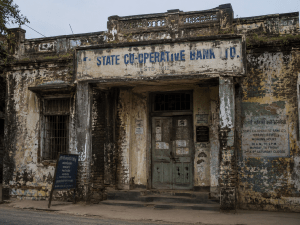
The debate may revive once again following a gala event held in Mumbai last week. On Saturday, Union Home and Cooperation Minister Amit Shah inaugurated the national headquarters of the National Urban Co-operative Finance and Development Corporation (NUCFDC), the apex institution for urban cooperative banks across India. Interestingly, the new headquarters has been established at the very site where the Apex Urban Bank once operated.
Sources in the cooperative sector say the Central Government decided to allot the premises of the Apex Urban Bank, which is currently under liquidation, to the NUCFDC. The new institution, which received approval from the Reserve Bank of India in 2024, is a BJP-led initiative. The fact that an institution strongly backed by the Union Ministry of Cooperation has established its national headquarters in Mumbai is not entirely incidental. To some extent, it revives old memories.
Today, Maharashtra has the highest number of urban cooperative banks in the country—449. Of these, 51 are in Mumbai and 48 in Pune. Nashik has 41, Solapur 32, Sangli 20, Satara 19 and Ahilyanagar 17. It is obvious that these banks will be important members of the Centre’s new initiative.
The Apex Urban Bank Was a Political Experiment
The site where the NUCFDC has established its national headquarters was once the head office of the Apex Urban Bank.
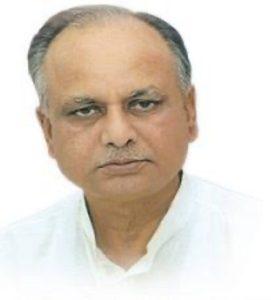
Omprakash Deora, founder of Hingoli People’s Bank and a Congress leader, was a distinctive political figure in Maharashtra during the 1990s. Although he did not occupy major positions in state politics, he carved out an independent space for himself in political circles through the cooperative sector.
The Apex Bank of Urban Banks of Maharashtra and Goa Ltd. was established under his leadership as an alternative to the Maharashtra State Cooperative Apex Bank. It was, in effect, a political experiment.
The bank’s banking licence was cancelled in 2003 following a Supreme Court judgment. But the story of the Apex Urban Bank did not end there. On paper, the institution continues to exist even today.
It Was Not Just a Bank That Was Needed, But a Substitute
The Apex Urban Bank began operating from Sharada Sadan, an old building on S. A. Brelvi Road in Mumbai’s Fort area. In the 1990s, the establishment of a separate apex bank for urban cooperative banks raised questions about the existing balance of power, whose roots run deep in Maharashtra’s cooperative sector.
At the time, the cooperative sector exercised enormous influence over Maharashtra’s politics. Whoever controlled the Maharashtra State Cooperative Apex Bank could expand political influence through district central cooperative banks, urban cooperative banks, sugar factories, spinning mills and various processing institutions operating on cooperative principles. Much-needed funding for the cooperative sector was, of course, channelled through the cooperative banking system.
A number of urban cooperative banks across the state became members of the Apex. Deposits began flowing in, and leaders from the cooperative sector started making a beeline for the office of Apex Bank chief Omprakash Deora.
This was seen as a direct challenge to the leadership of Sharad Pawar, who wielded considerable influence over the state’s cooperative sector and had a formidable command over Maharashtra’s political affairs.
The Maharashtra State Cooperative Apex Bank was alleged to be reluctant to provide financial support to leaders belonging to the anti-Pawar faction. Leaders such as Shankarrao Chavan and Vilasrao Deshmukh, their followers across the state, and some BJP-Shiv Sena leaders who were unhappy about not receiving the expected assistance from the apex bank supported the Apex Urban Bank experiment.
During the Shiv Sena-BJP coalition government, the then Cooperation Minister Jaiprakash Mundada also extended enthusiastic support to the bank.
The Two-State Route
There was a legal complication in having two apex cooperative banks in a single state. To overcome this problem, the Apex Bank’s jurisdiction was extended to two states, Maharashtra and Goa.
In October 1994, the institution was registered as a Multi-State Cooperative Society. In December 1995, the Shiv Sena-BJP coalition government notified it as an additional state cooperative bank. Subsequently, on March 22, 1996, the Reserve Bank of India granted it a banking licence.
The experiment also had political backing at the time. The bank licence was said to have been facilitated by the then Union Home Minister S. B. Chavan and Dr Manmohan Singh, the then Union Finance Minister. This made it clear that the experiment, which challenged Maharashtra’s established political order, also had support in Delhi.
The Real Battle Was Fought in Court
The Maharashtra State Cooperative Bank challenged the legal status of the Apex Urban Bank. The question was whether an institution registered under the Multi-State Cooperative Societies Act could be declared a state cooperative bank under the NABARD Act, and whether the Reserve Bank could grant it a banking licence on that basis.
In December 1996, the Bombay High Court ruled against the Apex Urban Bank. The matter subsequently reached the Supreme Court.
On October 29, 2003, the Supreme Court held that the Maharashtra government could not declare the Apex Bank a state cooperative bank under the relevant legal provisions. The court also made it clear that the legal basis on which the Reserve Bank had granted the bank its licence could not be sustained.
The very next day, on October 30, 2003, the bank’s banking licence was cancelled.
In one sense, this marked the end of the Apex Urban Bank’s political experiment.
But it was not the end of the institution itself.
The Licence Was Gone, But the Money and Assets Remained
It would be misleading to portray the Apex Urban Bank’s failure as the result of financial insolvency. Its licence was not cancelled because depositors panicked and withdrew their money, because of financial irregularities, or because the bank collapsed financially. The issue was primarily one of law and regulation.
The banking licence was revoked, but the bank still had investments, loans, deposits, property, financial claims and liabilities. Consequently, the period after 2003 was no longer about conducting banking operations; it was about untangling the institution’s financial affairs.
Available records indicate that as of March 31, 2004, the bank had approximately ₹433.55 crore in investments. Some of these investments were subsequently liquidated, generating a reported profit of around ₹86.70 crore.
Thus, 2003 was not the final year in the history of the Apex Urban Bank. It was the beginning of a new phase, one in which it ceased to exist as a bank in the conventional sense but continued to exist as an institution.
The Journey Towards Liquidation
After 2003, the Apex Urban Bank virtually disappeared from the public forum. But its loans, investments, properties and financial claims had not disappeared. Tax matters, loan recoveries, property management and litigation continued.
On November 25, 2019, the Central Government appointed a liquidator for the bank.
Prior to this, the Supreme Court had rejected a review petition challenging the cancellation of the banking licence. K. Raj Kumar, the bank’s then General Manager, had maintained that the institution’s financial position remained strong. According to him, the institution had 209 member banks, deposits of around ₹687 crore and loans of approximately ₹228 crore.
An alternative proposal had also been put forward: if revival as a bank was impossible, the institution could continue functioning as a multi-state cooperative society. That experiment, however, did not materialise.
There has also been discussion that deposits worth around ₹100 crore held by the defunct Apex Bank were transferred to the new NUCFDC.
And Now, Another Apex Institution
The need for an umbrella institution at the national level for urban cooperative banks is once again being emphasised. Through the NUCFDC, efforts are underway to provide urban cooperative banks across India with technological support, funding, treasury management, payment and settlement services, and other forms of assistance.
Three decades ago, an apex institution was created for urban cooperative banks in Maharashtra and Goa. The difference is that the earlier experiment challenged the power structure of cooperative politics within the state. The present initiative is aimed at strengthening urban cooperative banking at the national level.
That is why recalling the Apex Urban Bank today is not entirely misplaced.
The experiment undertaken by Omprakash Deora three decades ago became entangled in legal complications and ultimately failed as a banking venture. Yet the question he raised remains relevant even today.
Times have changed. Leaders have changed. The equations within the cooperative sector have changed. Even the names of apex institutions have changed.
But the relationship between cooperatives and politics?
There are few signs that it is changing.