
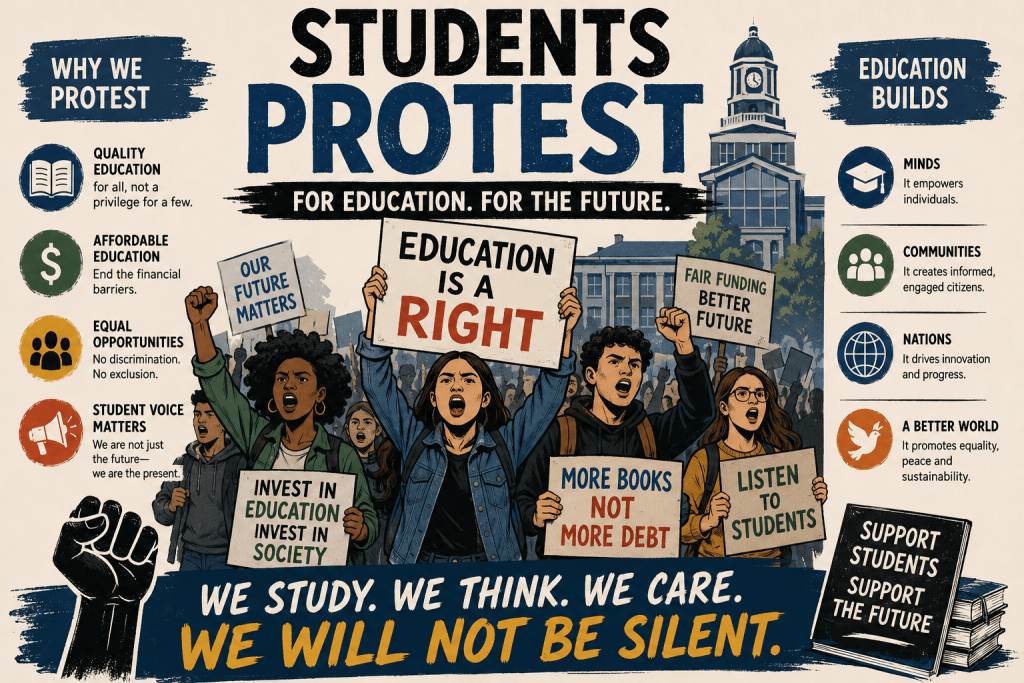
Discontent in Gen Z – Message is loud and clear
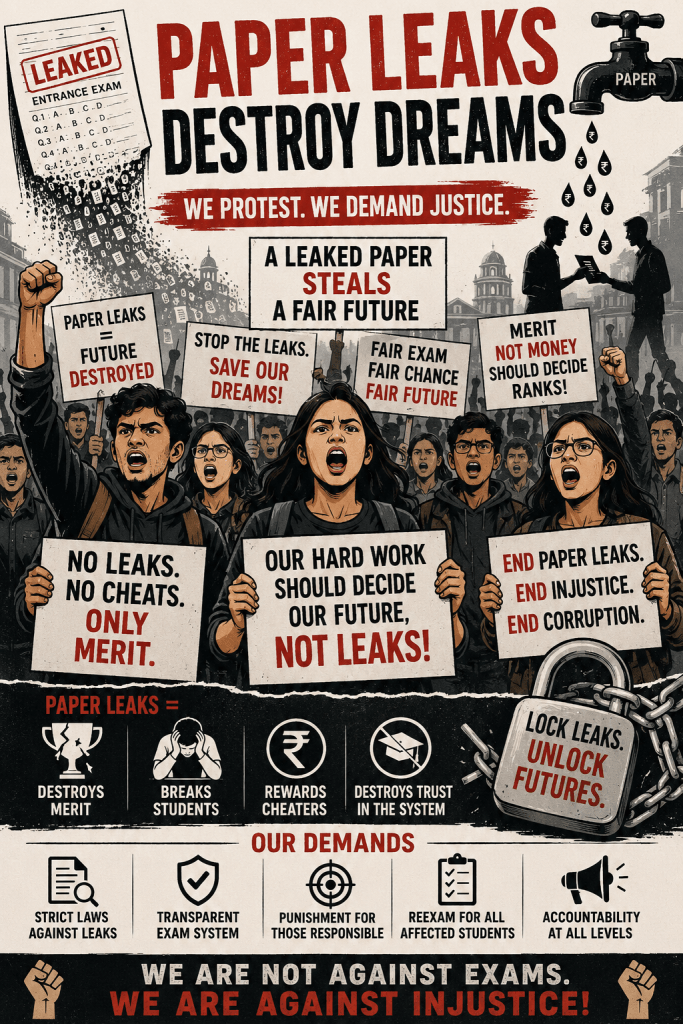
The student protest at Jantar Mantar, which became a nationwide talking point, was about much more than an alleged examination paper leak. It reflected deep-seated frustration among students over a range of issues, including alleged irregularities in the NEET examination, shortcomings in the education system, rising education costs, and growing uncertainty about employment. While the demand to withdraw criminal cases against the protesting students is likely to keep the issue alive for some time, the larger concerns raised by the movement can no longer be ignored.
In India, whenever a mass movement emerges around a major social issue, it is often viewed through a political lens as an agitation against the ruling party. Regardless of how long-standing the issue may be, the inevitable question asked is: Why has it surfaced during our tenure? A similar perception prevailed when Anna Hazare launched his anti-corruption movement during the Congress-led government in Maharashtra. That agitation also came to symbolise growing public dissatisfaction with the establishment. Rather than viewing every protest solely through a political prism, it is essential to understand the deeper social realities that give rise to such movements.
The Protest Was About More Than NEET
The immediate trigger for the recent student protests was the alleged NEET paper leak and the controversy surrounding the proposed re-examination. However, the movement conveyed a much broader message than was initially perceived. It reflected anxieties about whether education still guarantees meaningful employment, whether quality education is accessible to all, and how secure the future of young people is in an increasingly competitive and uncertain environment. It also conveyed a growing belief among many young people that the existing system of governance has failed to keep pace with their aspirations and expectations.
Since the present government at the Centre is serving its third consecutive term, expectations of meaningful reforms in education and employment have naturally been directed towards it. Consequently, the movement also acquired an anti-establishment character. Student participation on such a large scale underscored the depth of frustration among the country’s youth.
The Fundamental Challenge Before the Education System
The real question is whether India is doing enough to build a high-quality, inclusive education system. While Indian educational institutions have undoubtedly made progress in rankings and research, several structural problems continue to persist.
Many graduates from prestigious institutions such as the IITs and IIMs choose to pursue higher studies abroad. While this reflects their academic excellence, it also highlights the need to strengthen research infrastructure, academic facilities, and career opportunities within India.
In a country as vast and diverse as India, the number of public and private educational institutions has expanded significantly. Yet an important question remains unanswered: Is quality education accessible to all on equal terms? Increasing numbers of students are taking substantial loans to pursue postgraduate education overseas. Many migrate not only for higher education but also in search of better career opportunities. This growing trend deserves serious attention from policymakers.
The Rising Cost of Education
Whether at Jantar Mantar or during student marches across the country, one recurring grievance was the steadily rising cost of education and unequal access to opportunities. Many families simply cannot afford education in non-aided and non-government educational institutes, while others believe that the limited number of seats in public institutions severely restricts their chances.
Government-supported institutions have limited intake capacities, forcing many students to seek admission to private-run colleges. However, concerns are frequently raised about whether the quality of education, research standards, and graduate employability justify the ever-increasing tuition fees.
Lessons from Maharashtra
In Maharashtra, the Congress government led by Vasantdada Patil encouraged the establishment of private medical and engineering colleges in response to the needs of the time. Students from border districts such as Sangli and Kolhapur were crossing into Karnataka to pursue professional education at considerable expense. Expanding educational opportunities within Maharashtra was the principal objective behind the policy.
Over time, numerous private educational institutions were established. Many received land at concessional rates and various forms of government assistance. Large educational campuses and deemed universities emerged as a result. However, it is necessary to examine whether these institutions have fulfilled their social responsibilities, provided quality education, and ensured broader access for students from ordinary backgrounds. Unfortunately, this debate has not received the attention it deserves.
Several institutions were established by charitable trusts linked to cooperative sugar factories. A legitimate question that deserves consideration is whether the children of sugarcane farmers—whose contributions helped build these institutions—received meaningful concessions or preferential access to education.
The Questions Raised by Gen Z
Generation Z is asking fundamental questions. It is easy to criticise their language or style of expression, but it is far more important to understand the reasons behind their frustration. They are growing up amid soaring educational costs, intense competition, uncertain employment prospects, and mounting financial pressure on their families.
Today’s young people are no longer confined to local realities. Through smartphones and digital media, they have immediate access to global developments. As a result, they compare educational systems, technological progress, employment opportunities, and standards of living across countries rather than limiting themselves to local benchmarks.
This generation is also less influenced by traditional political loyalties and more inclined to form opinions based on personal experience and readily available information. They are increasingly questioning dynastic politics, inherited privilege, and conventional political structures. Many young people from rural areas choose to settle permanently in cities after completing their education, driven by changing lifestyles, better career opportunities, and economic realities.
While they respect tradition, they also recognise that knowledge, skills, and opportunity are the true foundations of success in a globally competitive world. Their methods of expression may sometimes appear unconventional or even confrontational, but the concerns they raise cannot simply be dismissed.
The Real Message of the Movement
One of the defining features of this movement was that it emerged largely without the leadership of any traditional political party. Although several opposition parties later extended their support, the movement originated from the independent initiative of students themselves.
In today’s political environment, organising a nationwide movement without a strong political banner is no easy task. This protest therefore sent an important message not only to the government but also to the opposition. Young people are no longer satisfied with promises alone; they seek concrete reforms in education, employment, transparency, and equal opportunity. Whether the Jantar Mantar protest is ultimately judged a success is of secondary importance. What matters far more are the issues it brought into the national conversation. Unless policymakers address the quality of education, equal access, affordability, employment opportunities, and young people’s confidence in public institutions, similar movements are likely to recur. The voice of Gen Z should not merely be heard as one of dissent—it should be understood as a call for meaningful change.