When Youths Diminish Vote-Bank Politics
Even though protests by students and young people were witnessed across the country from 2024 onwards, the issue had not become as explosive as it is today. The problems faced by candidates appearing for competitive examinations and unemployed youth were largely viewed as regional concerns. The prevailing atmosphere suggested that these issues did not need to be taken too seriously.
Meanwhile, the political scenario was unfolding as planned. The ruling side was busy offering various sops to targeted voters, unsettling the opposition. Welfare schemes for women and men were being rolled out aggressively. Along with schemes such as the Kisan Samman Yojana of the Centre, the Mukhya Mantri Tirth Darshan Yojana and the Ladki Bahin scheme, the political mood had become increasingly spiritual and devotional.
The opposition found it difficult to raise its voice against such schemes. Whatever little strength it had was further weakened by defections—the poaching of MLAs and MPs—and inquiries conducted by central agencies. Only a handful of opposition leaders were seen raising their voices over issues concerning students and young people.
The Impact of the Delhi Protest
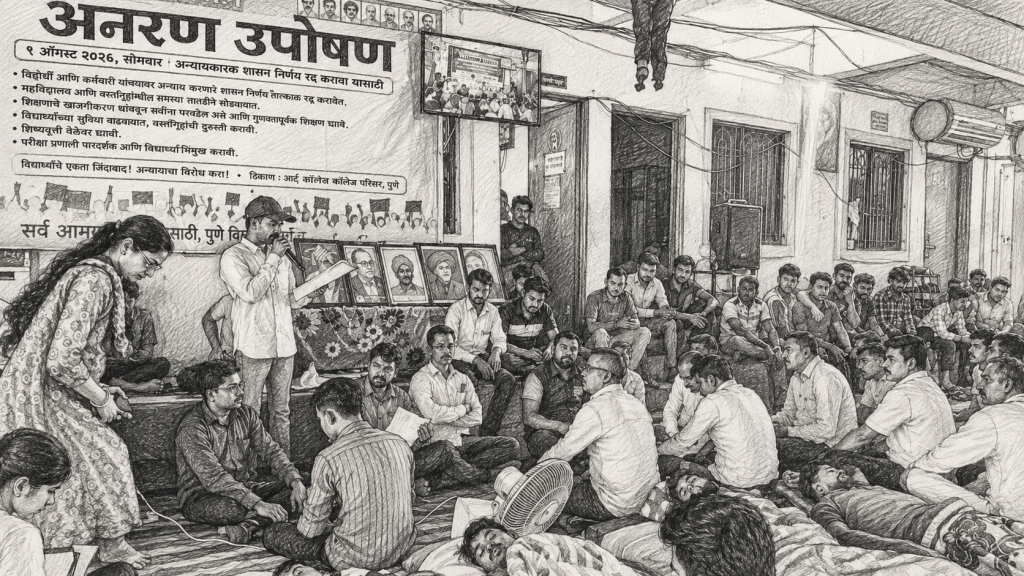
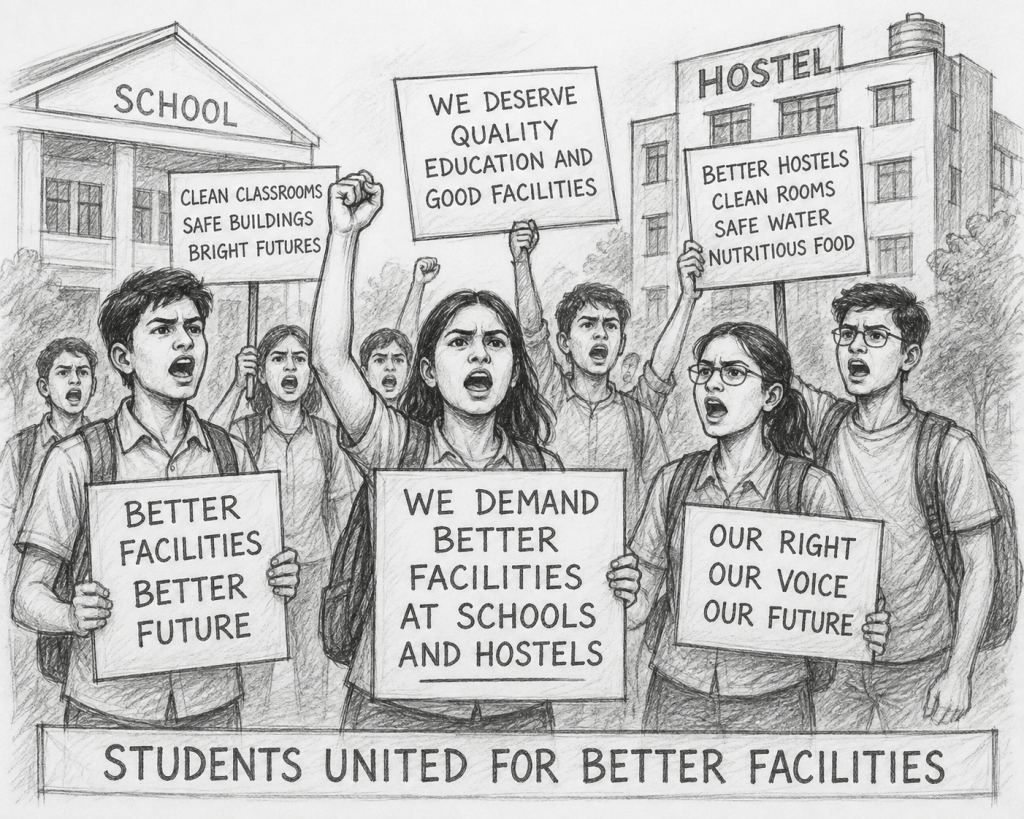
All this changed after the protest began at Jantar Mantar in Delhi. The movement started by the Cockroach Janta Party has not yet reached a definitive conclusion. Taking a cue from the Jantar Mantar agitation, students in different parts of the country have begun protesting over a range of issues, including poor approach roads, the deteriorating condition of schools and hostels, and paper leaks, while effectively using social media platforms to highlight their concerns.
As the seriousness of these issues has increased, government agencies have also begun taking cognisance of the problems being highlighted. At the government level, schools, colleges, training institutes and hostels, along with the assistance required by them, have now become matters of priority.
In a recent meeting, the Maharashtra cabinet decided that approximately 15 per cent of the total funds reserved for the District Planning and Development Committee (DPDC) would be spent on amenities for schools and colleges. At the same time, the Social Justice, Tribal Development, School Education and Higher Education departments have come together to review the situation. Hostel-related problems are also being taken more seriously, with these departments conducting reviews.
All this is an achievement of students and young people who had become increasingly disenchanted with the government over the lack of quality education.
The Problems Are Widespread
Currently, among many households, the biggest concerns are the unaffordability of education and the lack of jobs. Students from middle-class families- whether their parents are farmers, members of the working class or small entrepreneurs- face their own set of difficulties. Increasingly, these students are frustrated and angry about the state of education and the job market.
What compounds the problem is the limited growth in the number of reputed educational institutions. Even when prestigious institutions are government-run, securing admission is difficult, while fees charged by private institutions remain unaffordable for many families.
Entrance examinations such as NEET, through which students seek admission to government institutions, have increasingly been surrounded by controversy. Examinations conducted by the Maharashtra Public Service Commission (MPSC) have also been marred by controversies. Recruitment processes elsewhere are facing similar questions. Given this situation, it would be surprising if frustration among young people did not reach a boiling point.
MPSC Examinations: A Major Issue
In Maharashtra, young people are particularly distressed about examinations conducted by the MPSC. There was a time when the commission commanded enormous respect. But after the 1990s, its reputation gradually declined, and that deterioration shows no sign of stopping. Apparently, few people even seem to believe that the weakening of a constitutional institution is a serious threat to the future.
The most recent example is the recruitment examination for Drug Inspectors, which became controversial and ultimately had to be cancelled. Even more disturbing is the alleged involvement of MPSC officials in the controversy.
The plight of tribal boys and girls is another worrying issue. On the one hand, projects worth several lakh crore rupees—metros, monorails, flyovers, underground routes and expressways—are being undertaken in metropolitan areas. On the other, children in remote regions do not even have proper roads to reach their schools, while patients struggle to reach hospitals.
At a time when reports of such conditions are emerging, the fact that tribal students are protesting over various demands is deeply concerning. Adding to this, three female students died of snakebites in Gadchiroli, while another student died in Palghar district.
Where Does the Money Spent on Tribals Go?
The tribal population of the state is substantial. Around one million students study in government and aided residential schools. Of more than 500 aided schools, it is said that 90 per cent of the residential schools are owned by leaders of the Congress and NCP, while the remaining ones are associated with BJP leaders.
The government spends crores of rupees on these institutions, covering everything from sanitation and everyday necessities to adequate living space, mattresses, beds and food. If the government treasury is paying ₹38 crore a year merely as reimbursement of rent for aided residential schools operating in rented premises, one can only wonder how much is being spent on all the other requirements.
After seeing the condition of these residential schools, a natural question arises: where is all this money going?
The exploitation of poor and vulnerable people by their own leaders is a major issue that deserves discussion in the political context. Funds intended for the poorest and most disadvantaged appear to be siphoned off wherever possible, which helps explain why problems relating to health, education and housing persist despite changes in government.
What applies to tribal communities also applies to disadvantaged castes covered by the Social Justice Department. The schemes of both departments appear highly attractive and involve enormous expenditure. Yet no one seems willing to present an objective account of exactly how much is spent and how much actually reaches those who need it. The reason is that discussion of such issues is often not allowed on public platforms.
If the younger generation succeeds in bringing about a change in this regard, at least future generations will benefit.
The Government Machinery Has Finally Started Working
The government machinery now appears to have swung into action, and the government seems to be taking these problems seriously. Opposition leaders, too, have begun speaking about the issues, apparently believing that they can politically benefit from them.
This means that, in the coming period, the concerns of students and young people may overtake many other political issues. The main reason is that these are now subjects of discussion in households across the state. Their impact is being felt by a large number of families.
Student protests, the concerns of unemployed young people and the anxieties of those preparing for government jobs are increasingly becoming interconnected. Their common grievances include examination paper leaks, irregularities in recruitment processes, repeated cancellation or postponement of competitive examinations and the resulting delays in recruitment.
These concerns are compounded by unemployment and the shortage of secure government jobs, a perceived lack of transparency in examination-conducting bodies, police action against protesters, and demands for accountability from universities and government institutions. Together, these have become the central focus of the protests.
It is no longer politically viable for politicians to leave these issues unresolved while focusing on other matters. The route to the vote bank may now run through students and young people.