
Maharashtra Politics : A Change Difficult to Ignore
Maharashtra Politics: A Change Difficult to Ignore
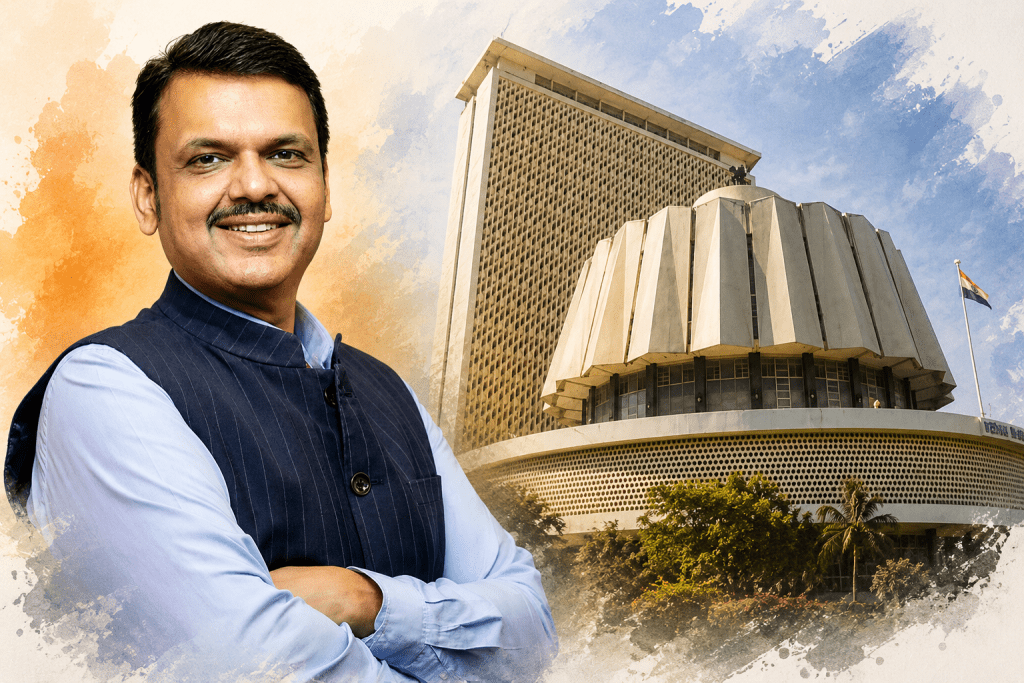
The recently concluded Monsoon Session of the Maharashtra Legislature will be remembered for setting several interesting and unconventional trends, whose long-term impact only time will reveal. Above all, the session stood out for the blunt and assertive remarks of Chief Minister Devendra Fadnavis, which surprised both his supporters and critics.
It was a markedly different Devendra Fadnavis from the one who served his first full term as Chief Minister between 2014 and 2019. During that period, he appeared more receptive to new ideas and carried the weight of high expectations from both his party and the political establishment. Even senior leaders from the Congress and the Nationalist Congress Party (NCP) watched his performance with curiosity. As the Bharatiya Janata Party (BJP) sought to expand its political footprint in Maharashtra, Fadnavis generally avoided confrontation with the opposition comprising the Congress, the NCP and smaller parties. Those days appear to be over.
In his second stint, observers have witnessed a distinctly different governing and political style. His personality and public demeanour have evolved to such an extent that even those who closely followed him during his years as an MLA may find the transformation striking. Whether this represents a fundamental change in his political outlook or merely a strategic adaptation is open to interpretation. What is undeniable, however, is that the difference is clearly perceptible.
His response to criticism over infrastructure projects during the Monsoon Session reflected this shift. While defending the government’s position on landslides at certain project sites, particularly at the missing link on the Mumbai-Pune Expressway, his choice of words drew sharp criticism. Although several political leaders reacted strongly, Fadnavis largely ignored the criticism, choosing to respond to remarks made by Maharashtra Navnirman Sena (MNS) chief Raj Thackeray, equating him with a stand-up comedian.
This more assertive style may well have its roots in the political upheavals that followed the 2019 Assembly election. The dramatic early-morning swearing-in, the BJP being forced to occupy the opposition benches despite emerging as the single largest party with 105 MLAs, the collapse of the Maha Vikas Aghadi government in 2022, and his subsequent return to government in a role perceived by many as secondary at the insistence of the party leadership may all have shaped his present political approach.
Today, Fadnavis responds to opposition criticism with far greater aggression. His emphasis on electoral strategy and organisational politics is evident in his constant political messaging. He appears more willing to take political risks and defend the government’s position with confidence.
The contrast between the Fadnavis of 2014-19 and the present-day leader is difficult to miss. The technocratic administrator who once projected a relatively conciliatory image has given way to a more assertive and politically combative leader, operating at a time when the opposition remains divided, and his alliance partners- the Shiv Sena and the NCP- appear cautious in asserting themselves.
His conduct during the recent Monsoon Session is likely to reinforce the perception among critics that he has become increasingly aggressive since 2019, relying more heavily on political messaging and pressure tactics. His sharp rhetoric, they argue, has also contributed to Maharashtra’s continuing political realignments.
The Monsoon Session also witnessed an opposition that appeared better coordinated and more effective in cornering the Mahayuti government on issues relating to governance, infrastructure, law and order, agriculture and the supplementary demands amounting to nearly ₹97,000 crore. Legislators including Jayant Patil (NCP), Bhaskar Jadhav, Aaditya Thackeray and Adv. Anil Parab (Shiv Sena UBT), Satej Patil (Congress), Sudhir Mungantiwar (BJP) and Bacchu Kadu (Shiv Sena) emerged as prominent voices, repeatedly targeting the government on a range of issues. Both Mungantiwar and Kadu represent the ruling side. The opposition was particularly vocal while debating several important Bills introduced by the ruling alliance.
Equally significant were certain procedural practices that appear to be setting new precedents and could have long-term implications for legislative functioning.
The first is the growing practice of the Chief Minister and the two Deputy Chief Ministers deputing other ministers to reply to legislative debates relating to their own departments. Although such delegation has occurred occasionally in the past, it has traditionally been the exception rather than the rule.
Since 2024, Deputy Chief Minister Eknath Shinde has frequently entrusted ministers such as Uday Samant, Shambhuraj Desai and Dadaji Bhuse with replying to debates concerning departments under his charge, including Urban Development, Housing and the Maharashtra State Road Development Corporation (MSRDC).
Deputy Chief Minister Sunetra Pawar has followed a similar approach by assigning ministers such as Aditi Tatkare and Hasan Mushrif to respond on matters relating to Minority Development, Sports and Youth Affairs, and the State Excise Department. Even Chief Minister Fadnavis delegated replies concerning the General Administration Department to Minister Ashish Shelar during the session.
Another noteworthy and somewhat worrying development was the repeated complaints by legislators regarding the absence of senior bureaucrats from the officers’ galleries in both Houses of the Legislature. These galleries are not considered an official part of the House, and the presence of the officials is mainly to note down the important issues raised by the members and the assurances given by the Ministers. Since the Council of Ministers is collectively responsible for the conduct of government business in the Legislature, the presence of senior officials has rarely become an issue.
Repeated objections from members cutting across party lines about the absence of the officers exposed flaws in the system. The persistence of this pattern has inevitably raised questions about whether the absenteeism reflects administrative indifference or a deliberate institutional practice that deserves closer scrutiny.
——————————————————————————————————